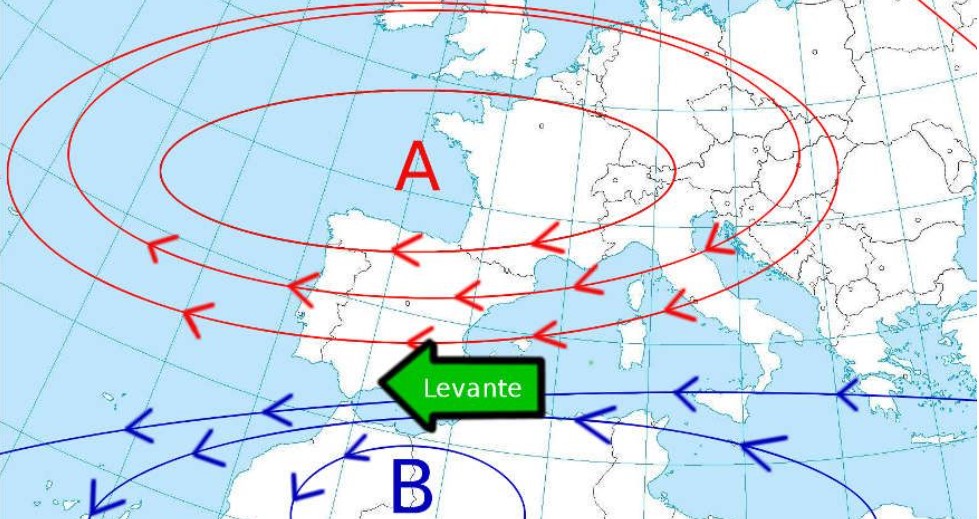
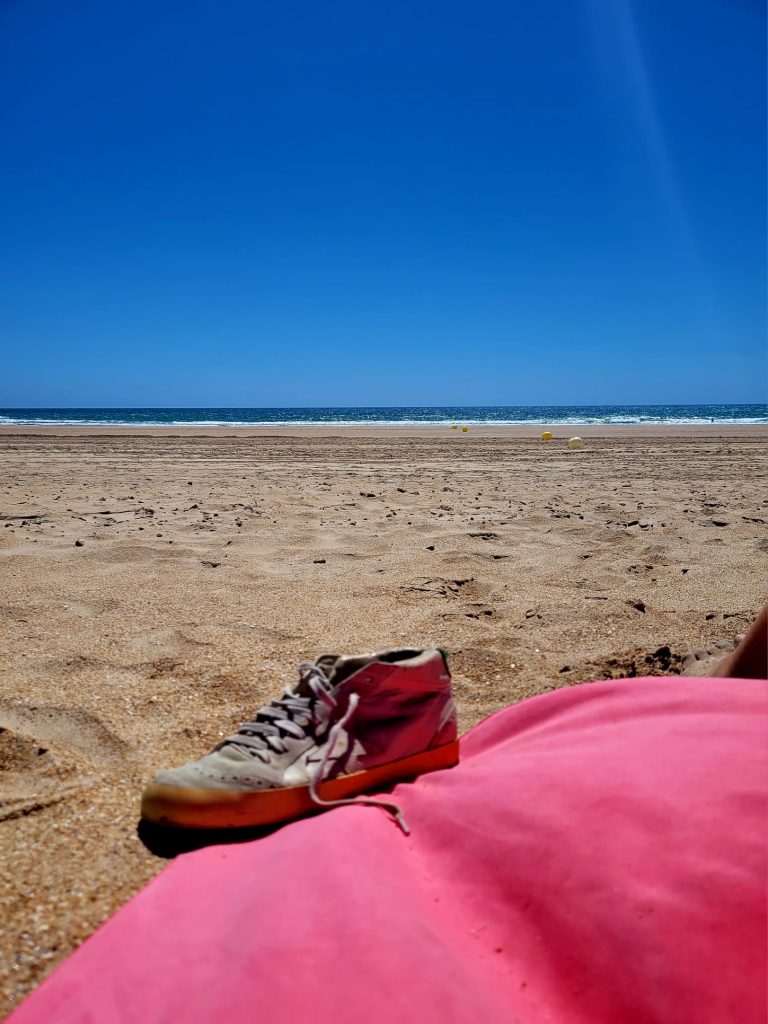
In Cádiz, two winds prevail along more than 100 km of coastline: the levante, a warm, dry wind coming from North Africa to the east, and the poniente, a cool, humid wind blowing from the Atlantic to the west. Depending on which one is blowing, the sea, the beachesand even the city’s mood change completely.
"Levante: the hot, dry wind
Originating in North Africa, the “levante” is a hot, dry wind that blows from the east, especially in summer. It takes its name from the direction in which the sun “rises” —an easy deduction. Often laden with dust and sand, it blows open doors and windows without knocking and sends papers flying throughout the house. Eli, who writes daily, knows a thing or two about this. She shelters books and notes as soon as the first gusts are felt. Outside, skirts and T-shirts billow. The bags covering city trash cans “strive to stand as straight as possible,” in Colette’s words. Straight as an “i,” in other words. It’s hard to put anything in them under these conditions. But it’s an easy sign to recognize their presence.
Its gusts are a beach towel's nightmare.
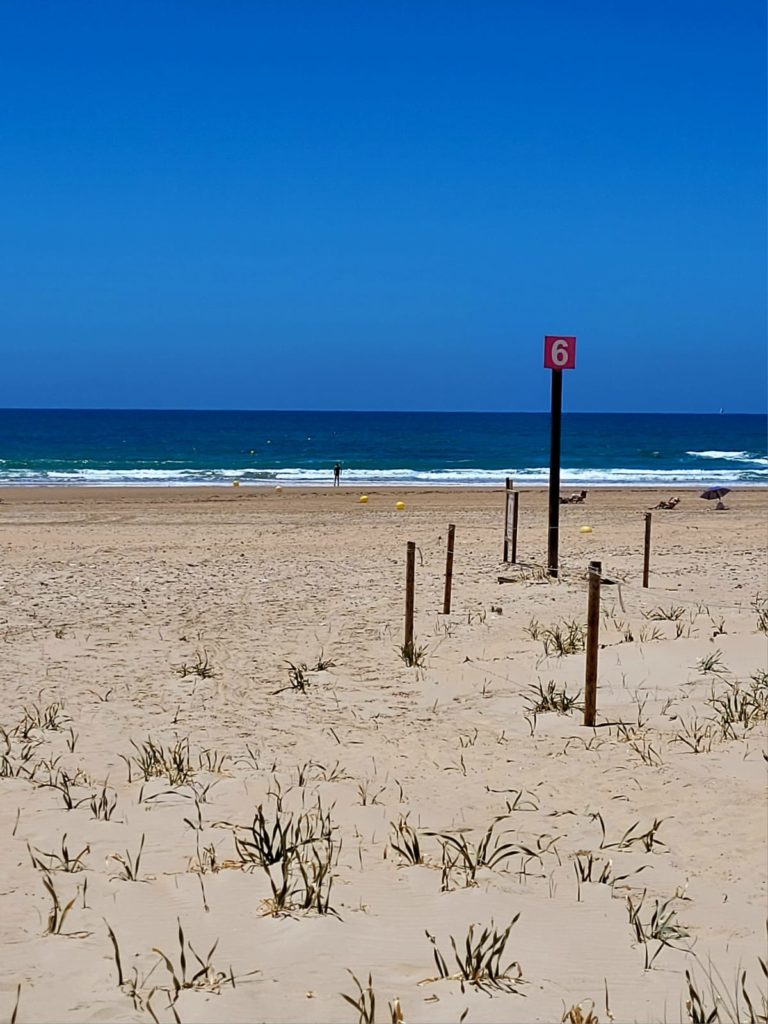
By the way, that’s actually how you can tell a Spaniard from a foreigner on the beach. A native of Cádiz will always choose a beach chair over a towel!Once unfolded and planted in the sand , they withstand the “levante” wind and sandstorms.
The “levante” has its advantages, too.
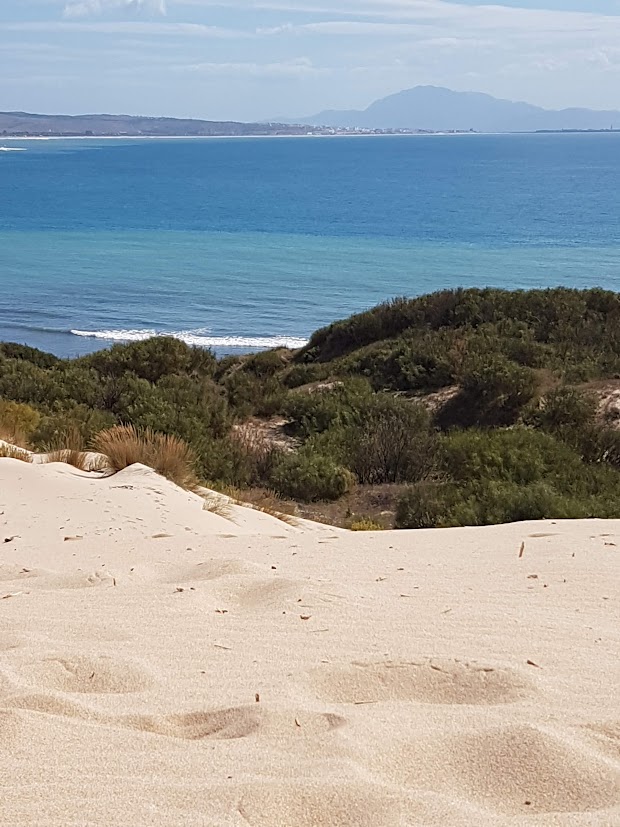
It shapes the characteristic dunes of Cadiz beaches, such as Punta Paloma and Bolonia. And the good news is that it eliminates algae.
"Poniente": a cool, damp wind
Unlike the “levante,” the “poniente” blows from the west, coming off the Atlantic. Milder and more humid, it brings cool, refreshing air. A bit too much so when it blows in winter. When we arrived in Cádiz, we found it curious to see the locals wearing down jackets. Why a down jacket when it’s 15 degrees in full sun? A sweater is enough… That’s without taking into account the wind, which drops the temperature by at least 5 degrees just by turning a corner.
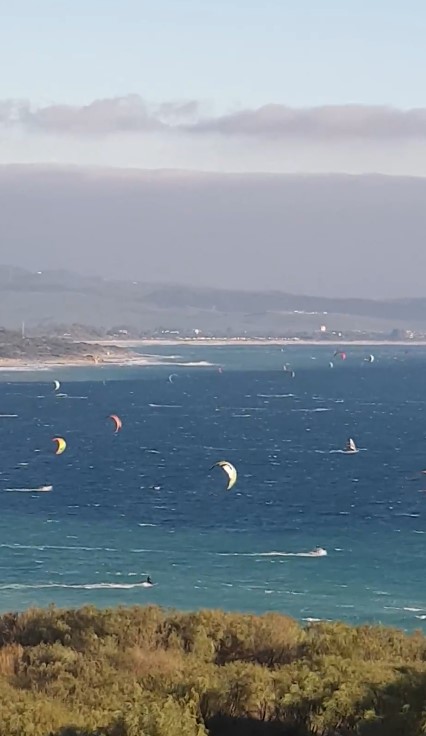
For surfers and kitesurfers, it's perfect.
The “poniente” wind creates the waves. There are plenty of them. Between Punta Paloma and Tarifa, on Valdevaqueros Beach, this is the must-visit spot.The average age is between 25 and 30. Proof of this is the number of campgrounds, some with teepees, like the KAMPAOH campground just below the road, with direct access to the beach. And for those who are still on the fence, everything here invites you to give the waves a try in a wild, natural setting: with the comfort of small hotels, bars, and sports equipment stores catering to all skill levels.
The more cautious prefer to swim at the edge.
How to choose your beach according to the wind?
If you’re looking for calm waters and plenty of sunshine, opt for south- or west-facing beaches, which are sheltered from the “levante.” And if you enjoy water sports, as you can imagine, beaches facing the “poniente” will be a better fit.