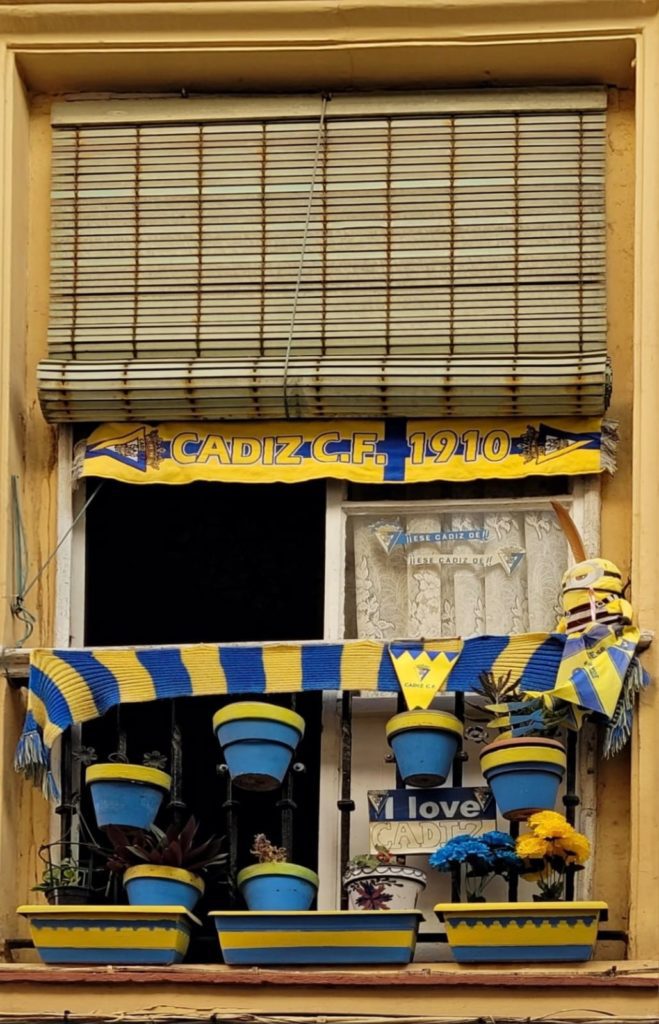
Cádiz is the oldest city in Europe, with 3,000 years of history on a peninsula. That’s enough for the people of Cádiz to consider it the starting point of all legends, whether true or made up. The most famous legend: penalty kicks are said to have been invented here in 1962, during a Carranza Trophy final. A historian from Madrid looked into it. He found something else.
To meet the gaditans, to listen to the guides, is to realize that the people of Cadiz love legends: their powdered sugar. First they put it on their cakes, then they sprinkle it on almost all their stories. A taste and a child's soul in them, clearly visible.
“Cádiz oculto*,”Volumes 1, 2, and 3are bestsellers at bookstores in Cádiz.
All the stories of Cadiz can be found here. They'll either keep you awake at night or make you sleep at night.
Recommended reading for a better understanding of the Gaditan soul. ➽ CLICK to order:
Cadiz, birthplace of penalty shoot-outs. Myth or reality?
Who would have thought that Spain, and more specifically Cadiz, would be the originator? It's a rule we're all familiar with, punctuating a lot of suffering in the face of draws (put your own spin on it). Penalty kicks were first introduced in a Carranza Trophy final in 1962.
Carranza Trophy, but what else?
This competition was created in August 1955 to replenish the club’s coffers , which had been depleted following the construction of the stadium of the same name. It was a tournament featuring the best Spanish and foreign clubs— an excuse to bring them together at Victoria Beach across from the stadium, with families and friends enjoying raffles and games. Very quickly, the Trophy became the must-attend festive event of August on every beach—whether you love soccer or not.
The celebrations aren’t just about joy; on the sand, you’ll find sofas, tables, chairs, and even a couch. And…the barbecue! For two days, it’s a given: Cadiz will be filled with the aroma of charcoal, sardines, and “criollo” sausages. Recently, barbecues have been banned, but the party goes on.
Let's go back to the 1962 Trophy final, Real Zaragoza vs. FC Barcelona.
The match was about to go down to the wire. Two periods of extra time, a few goals scored, but the score remained even. A daring manager, Rafael Ballester Sierra, came up with the brilliant idea of replacing extra time with a penalty shoot-out.
After 16 shots, FC Barcelona won the match, becoming the first Spanish club to win a title in this way, despite it being a friendly match.
This Spanish innovation quickly spread around the world, winning over FIFA and UEFA. A few years later, penalty kicks became the official tie-breaking rule in major competitions.
The next time you watch a penalty shootout, think of Cadiz.
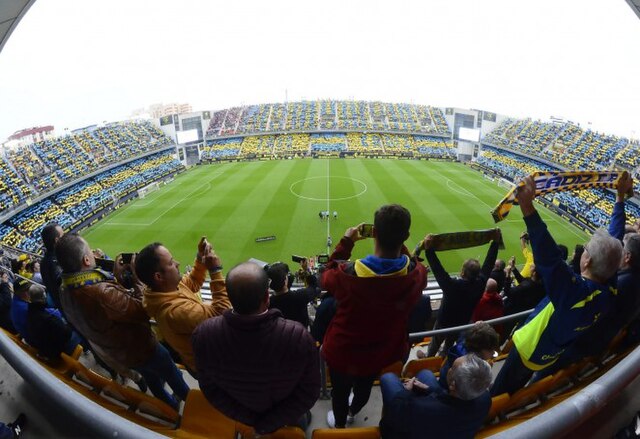
And yet, penalties: a deflated myth!
In the leading magazine “Cuadernos de futbol” published by the CIHEFE (Center for Research on the History and Statistics of Spanish Soccer) Luis Javier Bravo Mayor, a historian of Madrid soccer, reveals a completely different story. His article is dated March 5, 2017
A study conducted for the Argentine CIHF (Center for the Study of the History of Football) by Jorge Gallego, a member of the center and regular contributor to CIHEFE’s “Cuadernos de futbol,”refutes the theory that penalty kicks were invented in Cádiz.
The link to this study can be found here: “The Distant Origins of the Penalty Shootout”
1955, seven years before the Carranza Trophy in La Coruña, during a match between Deportivo and Vasco de Gama
On this occasion, the first traces of this future famous shoot-out were found, if you look hard enough: an archeological find, as Cadiz likes them. In the event of a tie, the rules of the match already stipulated that the teams would be decided by a penalty shoot-out.
On May 26, 1955, on page 5 of the Madrid sports newspaper “Marca”, the conditions for resolving a tie were specified:
“… if, at the end of regulation time, no winner had emerged, a 30-minute overtime period would be played. If the tie persisted, the trophy would be awarded to the team that scored the most goals in a penalty shootout.”
The legend of Cadiz has been swept away, as if by a blow from Levante!
So the next time you attend a penalty shootout, remember:
It all began in Corunna, not Cadiz. But myths die hard
Even today, there are still those who argue about it on social media. The debates are often amusing, pitting fair-minded Gaditans against those who refuse to accept the “harsh” truth. The tone remains lighthearted. In the spirit of the carnival songs, the playful spirit of Cádiz.
* “Cádiz oculto” by José Manuel Serrano Cueto is also available at the Quorum Libro bookstore, located at 27 Calle Ancha in Cádiz.
➽ How about we put together your Cadix? 😉